

You had the windows cleaned, the glass looked perfect, and three weeks later there are rings on the lower panes, a haze across the lanai slider and a line of orange freckles on the side of the house facing the lawn. That is not your imagination, and it usually is not a cleaning that went wrong. Florida is hard on glass. Our water, our weather and our air all leave something behind, and each one leaves a different mark.
Knowing which mark is which tells you what caused it, how to slow it down, and when it is time to call for help before it turns permanent.
Sprinkler overspray is the biggest culprit
If the worst spots on your house are on the lower half of the windows, on one side, look down. There is almost always a sprinkler head nearby.
Irrigation water around Tampa Bay comes from three places, and they all mark glass in their own way.
Well water. Many homes in Pasco and Hillsborough run their irrigation off a private well. Well water often carries iron and other minerals. When it dries on glass, you get white rings from the calcium and orange or brown staining from the iron. You will usually see the same orange on the stucco, the driveway and the pool cage frame nearby.
Reclaimed water. Plenty of newer neighborhoods water their lawns with reclaimed water from the county. It is treated and safe for landscaping, but it is not clean enough for glass. It carries dissolved minerals and nutrients, and it dries into a cloudy, uneven film.
City water. Even treated tap water is hard enough to leave spots. They are lighter than well water spots, but they add up.
The problem is not a single spray. It is the cycle. The sprinklers run, the water beads on the glass, the Florida sun bakes it dry in minutes, and the minerals stay behind. Do that a few times a week for a season and each new layer bonds to the last one. What started as a spot you could wipe away becomes a crust that fights back.
Afternoon storms do not rinse your glass
It is tempting to think a summer downpour gives the windows a free wash. It does the opposite.
Storm water falls through dust and pollen, runs across your roof, picks up grit from the shingles or tile, and pours off the eaves onto the glass below. Then the clouds clear, the sun comes out, and all of it dries in place. A house that gets a storm most afternoons in the wet season goes through that cycle over and over.
Windows under a roof edge with no gutter, or under a gutter that overflows, get it the worst. If one or two windows always look dirtier than the rest, trace the path the water takes to reach them.
Pollen and lovebug seasons
Our pollen comes early. Oaks and pines drop a yellow green dust across everything in late winter and spring, and it clings to glass, screens and window tracks. On its own it is dry and loose. Add morning dew or a light shower and it turns into a sticky film that streaks when you try to wipe it.
Then there are lovebugs. Twice a year, in late spring and again in late summer, they drift across yards and roads in clouds. They land on windows, lanai screens and anything light colored, and the ones that die there bake onto the surface. Their remains are acidic, and left in the sun they are tough to lift from glass and frames. Removing them sooner rather than later makes a real difference.
Salt air on the Gulf side
If you live on the Pinellas side, in Dunedin, Clearwater, Palm Harbor or out toward New Port Richey, your windows deal with salt as well. A breeze off the water carries a fine mist that settles on glass as a gray haze. Salt pulls moisture from the air, so the film stays slightly tacky and grabs every bit of dust that blows by.
Salt is also hard on metal. Over time it dulls aluminum window frames, pits screen frames and builds up in sliding door tracks until the door starts to drag. Homes closer to the water tend to need their glass and tracks cleaned more often than homes a few miles inland.
How to tell what is on your glass
Before you grab a spray bottle, take a close look. Here is a quick guide to the most common marks we see on Tampa Bay homes.
| What you see | Usual cause | What helps |
|---|---|---|
| White rings and dots on lower panes | Sprinkler overspray, hard water | Adjust the head, then a hard water treatment |
| Orange or brown freckles | Iron in well water | Adjust the head, then an iron stain treatment |
| Even gray haze on all windows | Salt air, dust, pollen | Regular professional cleaning |
| Streaky yellow film in spring | Pollen mixed with dew | Cleaning after the heaviest pollen drop |
| Dark spatter on screens and glass | Lovebugs | Prompt removal before they bake on |
| Cloudy glass that stays cloudy when clean | Etching from old mineral buildup | An honest assessment, since it may not fully reverse |
What actually slows the spotting down
You cannot change the weather, but a few small changes make a clean window last much longer.
Adjust or redirect the sprinkler heads. This is the single most useful thing you can do. Turn on each zone and watch where the water lands. Any head that reaches glass, stucco or a screen door needs its arc or angle changed. It costs little and it stops the damage at the source.
Run irrigation early. Watering before sunrise lets any stray water run off before the sun gets strong, so less of it dries in place.
Clean the screens with the glass. A screen full of pollen and dust dumps that dirt down the window the next time it rains. Cleaning glass and screens together keeps the fresh glass cleaner for longer.
Keep gutters flowing. An overflowing gutter pours dirty water straight down the windows beneath it every storm.
Do not scrub with the wrong tools. Scouring pads, razor blades on coated glass and household cleaners with ammonia or grit can scratch glass or damage tint and coatings. When mineral spots do not come off with plain cleaning, that is a sign to stop, not to push harder.
When spots turn into etching
Mineral deposits do not stay on top of the glass forever. Left through enough wet and dry cycles, they start to eat into the surface. Etched glass looks cloudy even when it is perfectly clean and dry, and you can often feel a slight roughness with a fingertip.
Early buildup responds well to a professional hard water treatment. Long set etching may improve but not disappear, and anyone who promises otherwise without looking at the glass is guessing. The best defense is regular cleaning so the minerals never get the chance to settle in. For a sense of how often that should be for your home, see our guide on how often to clean windows in Tampa Bay.
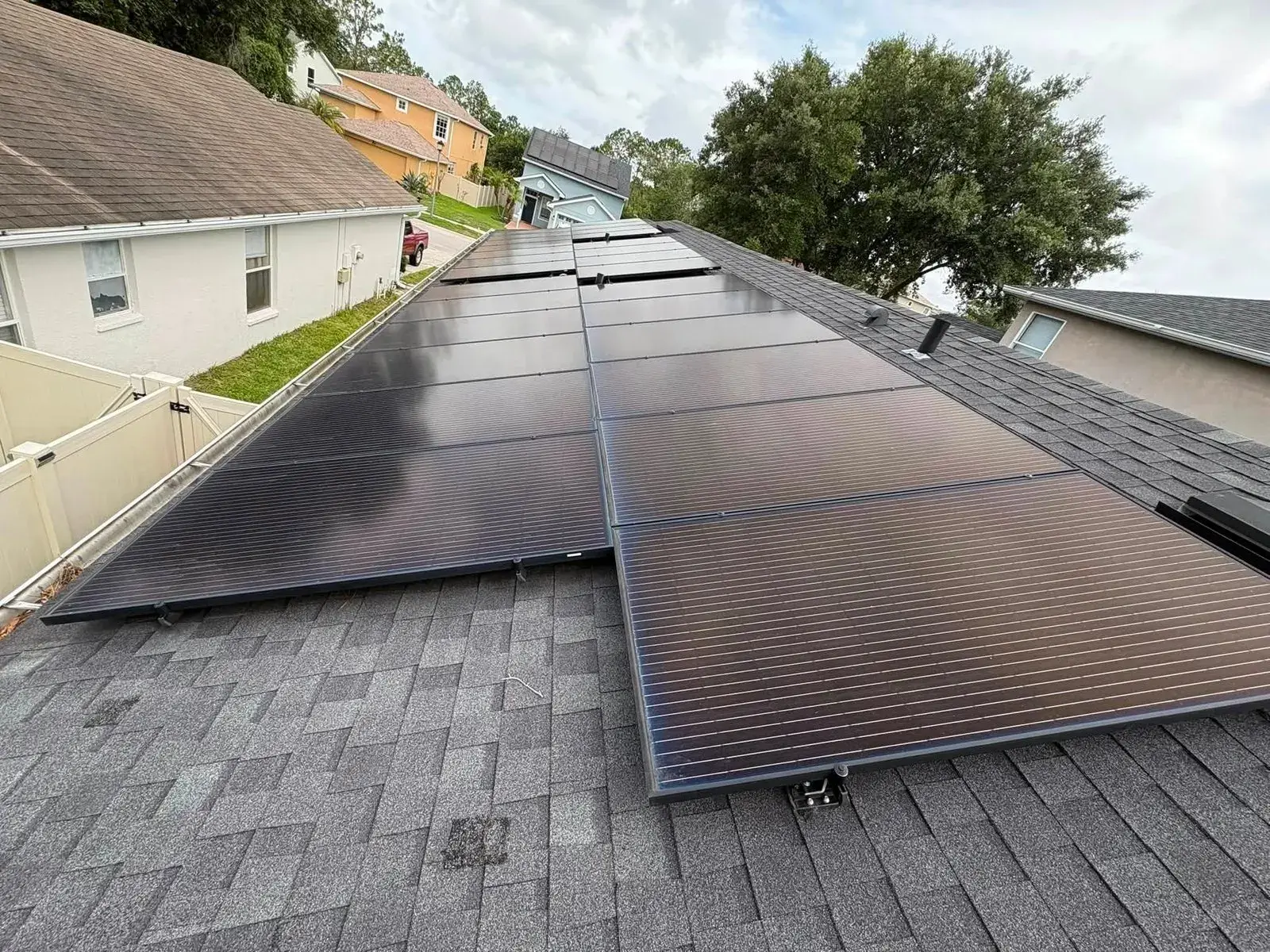
If your house has solar, the same sprinkler, pollen and bird issues show up on the panels, where they cost you more than a view. We cover that in do solar panels in Florida need cleaning.
Getting your glass clear again
Our window cleaning covers the glass inside and out, the frames, sills, screens and tracks, with hard water spot treatment for the sprinkler stains that ordinary cleaning leaves behind. Every visit is backed by our 100% streak-free guarantee, and estimates are always free.
When you are ready, book your window cleaning online or call (813) 444-4499, and we will tell you honestly what your glass needs.