A lot of Tampa Bay homeowners are told their solar panels clean themselves. We get storms most summer afternoons, after all. Then they notice a gray film on the glass from an upstairs window, a scatter of bird droppings along one edge, or a production chart in their app that seems to be drifting down on sunny days.
The truth is that Florida panels do get dirty, and some of what lands on them does not wash off in the rain. Whether yours need cleaning right now depends on your roof, your surroundings and what your own system is telling you. Here is how to read the signs, and what a safe cleaning looks like when it is time.
Why rain is not enough
Rain does rinse loose dust. What it does not do is remove the things that actually block sunlight.
Storm water carries its own dust and pollen. It runs down the tilted panel and slows when it hits the bottom frame, where it drops its load and dries in the sun. Over a season, that leaves a line of grime along the low edge of every panel. Mineral spots from the rain itself dry on the glass too.
Bird droppings are a different problem. They land in concentrated spots, bake hard in the heat, and sit over individual cells. Rain softens the edges and little else.
Solar panels are also mounted at a fairly shallow angle on most Florida roofs. That helps with our sun, but it means water drains slowly and dirt settles easily.
What builds up on Tampa Bay panels
Pollen. Oaks and pines coat the roof in a yellow film through late winter and spring. Mixed with dew, it turns sticky and holds on to the glass.
Bird droppings. Roofs near lakes, ponds, retention areas and big trees get more bird traffic. Droppings are one of the most common problems on Tampa Bay solar roofs.
Lovebugs. In late spring and late summer, lovebugs settle on light, warm surfaces, and solar glass is one of them. They bake on quickly.
Sprinkler spray. On single story homes and low roof sections, irrigation can reach the lower row of panels. Well water and reclaimed water both leave spots, and well water adds iron staining.
Dust. Homes near dirt roads, pastures or new construction, common around Zephyrhills, Dade City and the growing parts of Pasco (see the communities we serve), collect a fine layer of dust that dulls the glass.
Salt. On the Gulf side, salt spray builds a hazy film that grabs more dust.
Leaves and debris. Oak leaves and pine needles collect along panel edges and in the gap between panels and roof.
Signs your panels need cleaning
Every system is different, so let your own data and your own eyes decide, not a generic rule.
Your monitoring app shows a slide on clear days. Most systems come with an app or web portal from the inverter or installer. Compare clear, sunny days now against clear days a few weeks or months ago at a similar time of year. Weather, day length and sun angle all change output, so look for a drop that the weather does not explain.
One panel or string reads lower than the rest. If your system reports per panel or per string, a single low reading can point to a heavy dropping, a patch of debris or shading from something that has landed on the glass. It can also point to an equipment issue, which is a job for your installer.
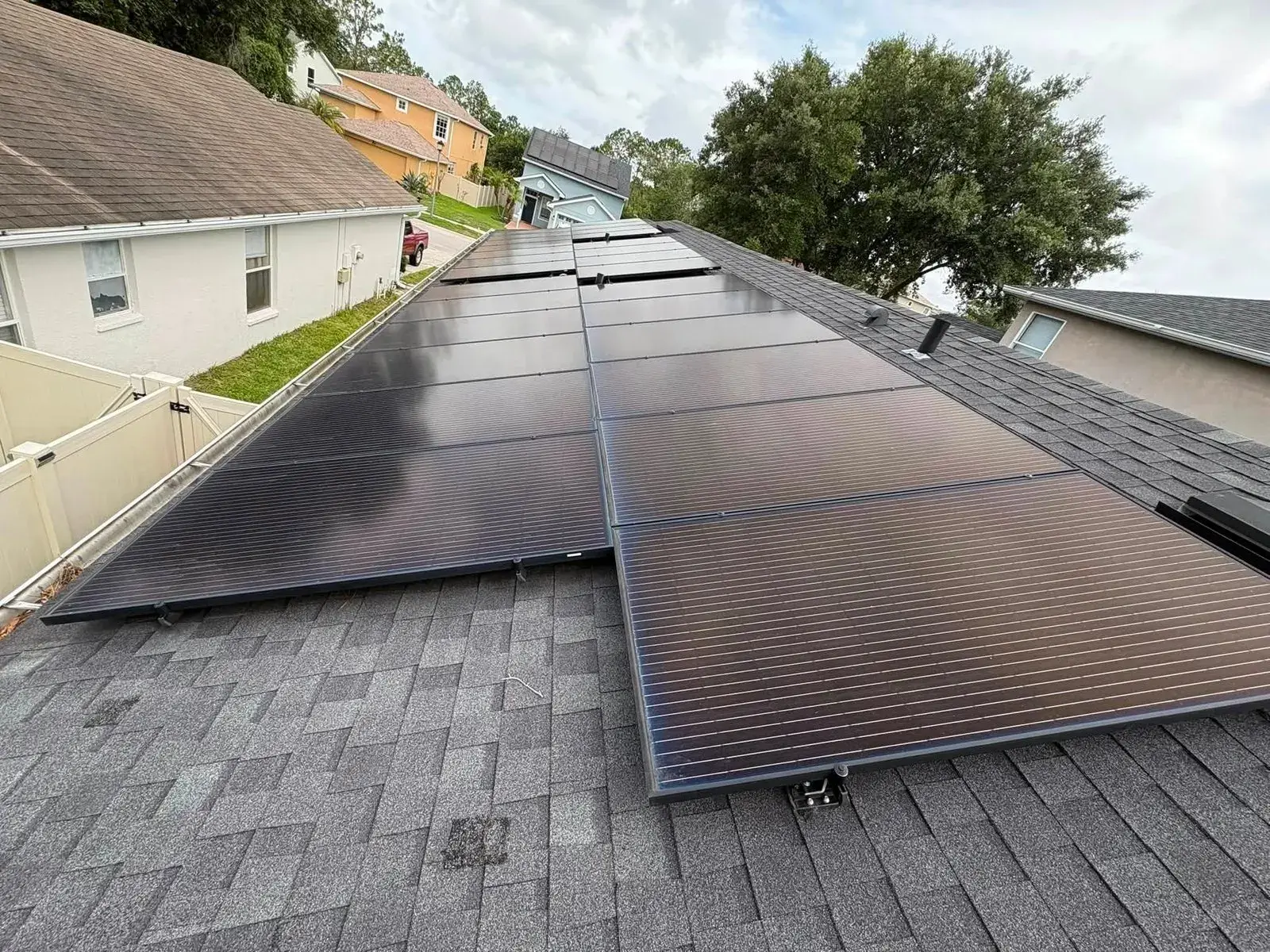
You can see it. From the yard or an upstairs window, look for a gray or yellow film, a dark line of grime along the bottom edges, spots, or white splatter from birds.
Something changed nearby. A new home going up next door, a road being graded or a tree that has grown over the roof all speed up soiling.
How much output dirt costs varies widely from roof to roof, and nobody can give you a reliable number without looking at your system and your data. Treat your monitoring app as the judge.
What a safe cleaning involves
Solar panels are durable in the sun and fragile under the wrong cleaning. Here is what a panel-safe cleaning should look like, whoever does it.
Follow the manufacturer's guidance. Every panel maker publishes cleaning instructions, usually in the installation manual or warranty documents. They spell out which methods, tools and cleaners are allowed. Read yours before anyone touches the array.
Soft brushes and purified water. Panels are cleaned with soft bristle brushes and purified, spot-free water that dries clear. No scouring pads, no squeegee blades that can scratch, no household glass cleaner.
No harsh chemicals. Strong detergents and solvents can damage the anti-reflective coating on the glass and leave residue that attracts more dirt.
No pressure washing. High pressure can harm the coating, drive water past seals and into electrical connections, and may void the warranty. It is a common mistake, and an expensive one.
Clean when the panels are cool. Early morning is best. Spraying cold water on glass that has been baking in the midday sun can stress it, and the water flashes off too fast to rinse properly.
Stay off the panels. Nobody should stand, kneel or lean on solar panels. Weight on the glass can cause microcracks you cannot see. Cleaning is done from the roof around the array or from the ground with extension poles.
Protect the roof. Florida tile and shingle roofs are slippery when wet and easy to crack. Good roof access means proper footing, careful placement of ladders and attention to gutters and landscaping below.
Look while you clean. A cleaning is a good chance to spot cracked glass, lifted edges, loose wiring, debris packed under the array or signs of critters nesting underneath. Anything electrical or structural should go to your installer.
Should you do it yourself?
If your panels are on a single story roof section you can reach from the ground with a soft brush on a pole and a low pressure hose, and your panel maker's guidance allows it, a light rinse of fresh dust is possible. Do it early in the morning and never climb onto the panels.
For panels on a second story or a steep roof, for baked-on droppings and film, or when you are not sure what your warranty allows, it is safer to leave it to a professional with the right brushes, water and roof access equipment. Falls from roofs are serious, and a cracked panel costs far more than a cleaning.
How often is right?
There is no single answer for Florida. A house under oak trees by a pond needs more attention than an open lot with no birds. Watch your monitoring app for a season. If output drifts down after the spring pollen or after lovebug season and comes back after a cleaning, you have found your rhythm.
Many homeowners pair panel cleaning with their window cleaning, since the same pollen, sprinklers and birds hit both. Our post on why Florida windows spot so fast covers those same culprits on glass. And if you are planning to have the driveway or lanai washed, read pressure washing driveways and lanais safely for why that equipment should never be pointed at your roof or your panels.
Get your panels cleaned the safe way
Our solar panel cleaning uses soft brushes and purified water with no harsh chemicals, and we tell you about anything we notice on the array while we are up there. Estimates are free.
Book a solar panel cleaning online or call (813) 444-4499, and have your panel count handy.